Does your dog know how long you have been gone?
Dogs can time short intervals and they learn the shape of a day. That is not the same as counting the hours you were out. Scent, routine, and a familiar shirt tell us more than a hidden inner clock.
You leave at eight. You come back at six. The greeting at the door is huge, and it is tempting to say that your dog has been counting. The honest version is smaller, and more interesting. Dogs can time some intervals. They learn the pattern of a household day. There is no good evidence that they measure an eight-hour absence the way you read a clock.
Short intervals, yes
In the lab, dogs can learn to tell short durations apart. Macpherson and Roberts, in a 2017 paper in the Journal of Comparative Psychology, showed interval timing in domestic dogs, including a case where one cue could overshadow another. Other work has used bisection tasks, in which an animal has to judge whether a signal is closer to a short duration or a long one, usually on the scale of seconds.
That is real timing. It is also a long way from “it has been six hours.” Stretching a seconds-long skill into an inner timesheet for a workday is a guess, and it should be labelled as one.
A day has a shape
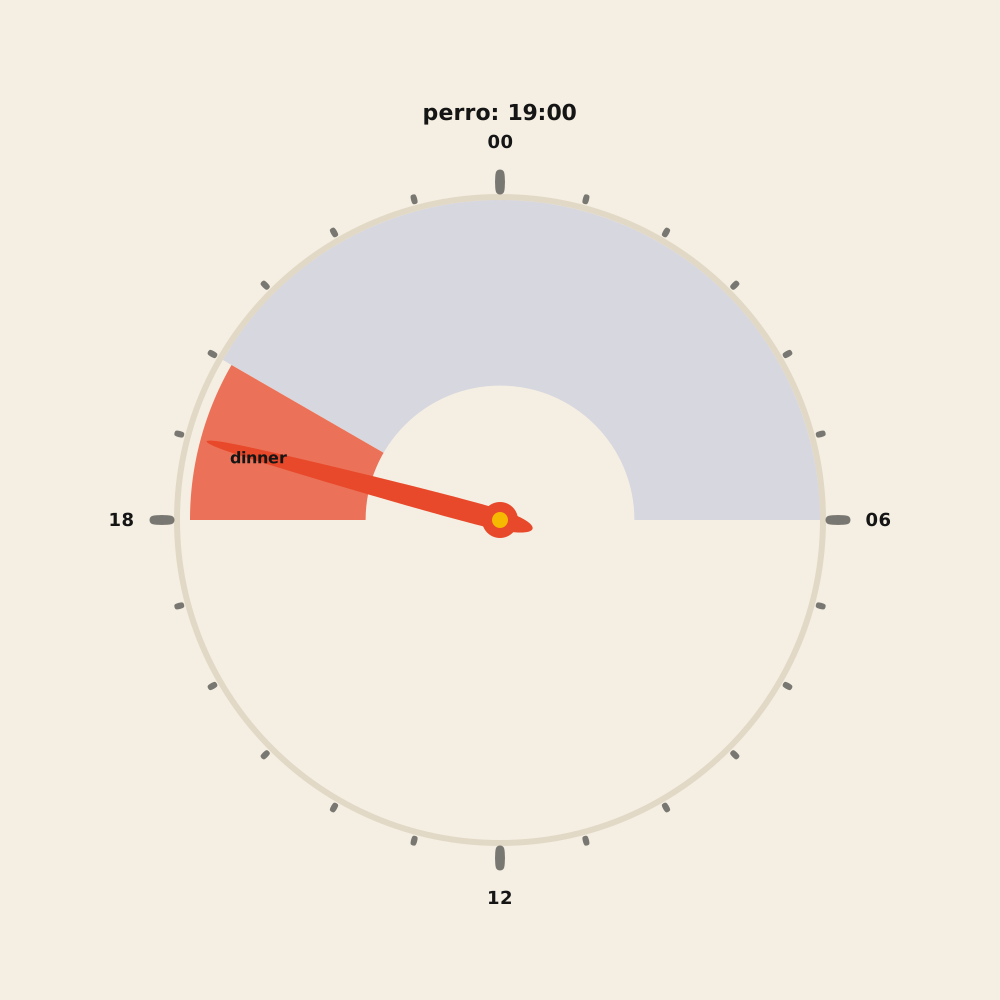
Dogs, like other mammals, have daily rhythms. They can learn that food, walks, and your return cluster at certain times, and they often become restless as those times approach. Light, household noise, and the regular appearance of a food bowl are all clocks of a kind. A dog that waits by the door at 6:30 may be tracking the afternoon pattern, not adding minutes.
Smell is powerful. It is not a proven hourglass.
Your scent stays in the house when you leave. It is also special in the brain. In the 2015 fMRI study by Berns, Brooks, and Spivak, the scent of a familiar person — who was not in the scanner room — activated the caudate more than the other odors tested, in 12 awake dogs. That is a strong result about recognition and reward. It is not a result about time.
A popular explanation says that dogs judge how long you have been gone by how much your smell has faded. It is a neat idea. It has not, so far, been isolated in a controlled test that varies only the age of a scent and then measures a timing judgment. Until someone runs that experiment, “the nose is a stopwatch” remains a story, not a finding.
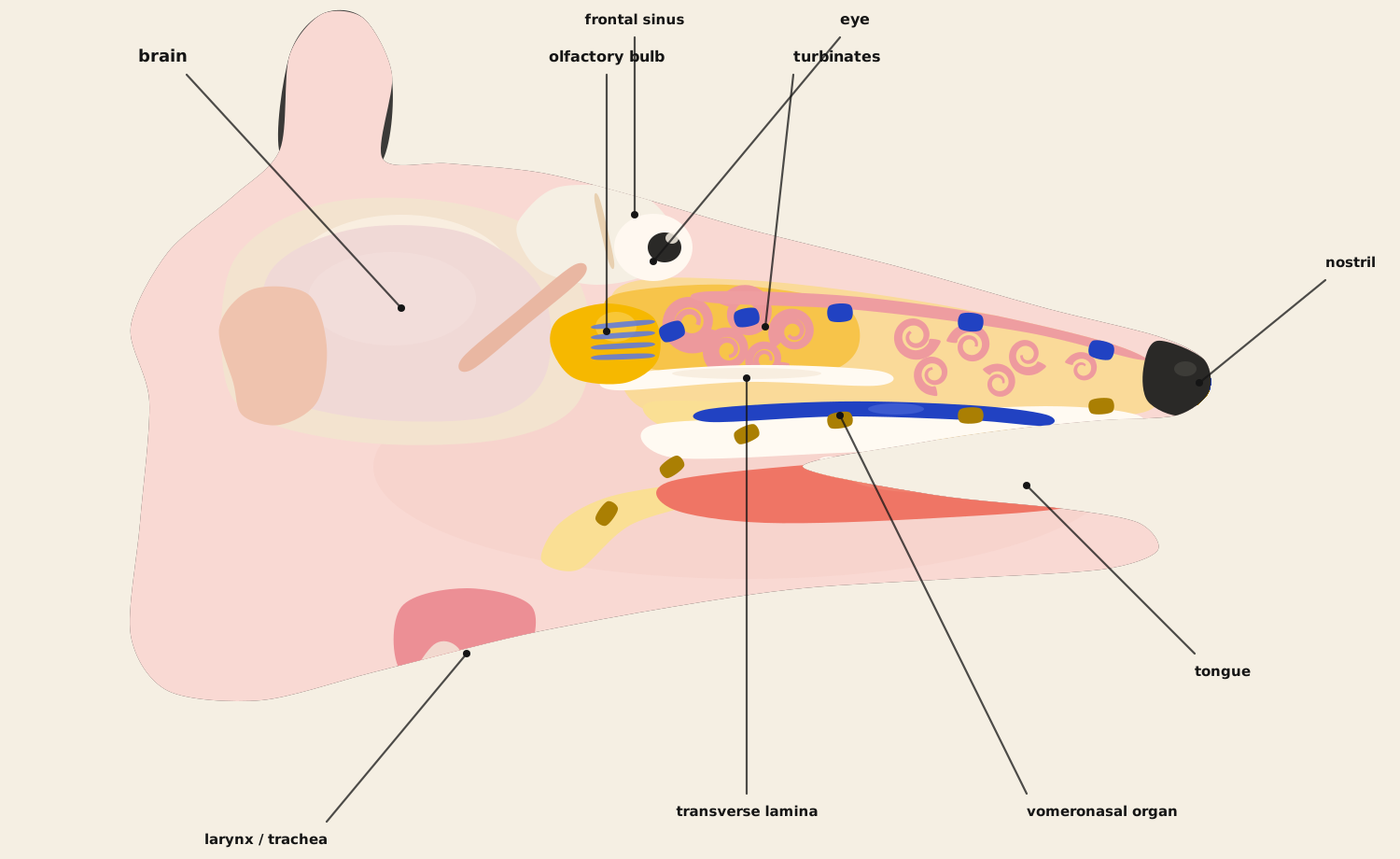
The nose is still doing a lot. Craven, Paterson, and Settles (2010) described how inspired air in a dog is split, with a stream sent to the olfactory recess, and how expired air can be directed so that it does not simply wash that recess clean. A worn shirt on a chair is a dense, familiar smell. It may comfort a dog you leave at home. That is a reasonable thing to try. It is not proof that the shirt is resetting an internal counter.
What this means at home
- Do not assume a frantic greeting means the dog has been in distress for every minute you were out. It may also be a ritual of reunion.
- If departures are hard, work on the routine around leaving and returning, and ask a qualified professional if the distress is intense or destructive. This article cannot diagnose separation problems.
- A worn T-shirt is a low-cost comfort object for some dogs. Treat it as a maybe, and watch what your dog actually does with it.
- Keep the shape of the day as steady as you reasonably can. Meals and walks are easier clocks than an unexplained eight-hour gap.
Sources
- Macpherson, K., & Roberts, W. A. (2017). On the clock: interval timing and overshadowing in domestic dogs (Canis familiaris). Journal of Comparative Psychology, 131(4). https://doi.org/10.1037/com0000083
- Berns, G. S., Brooks, A. M., & Spivak, M. (2015). Scent of the familiar: an fMRI study of canine brain responses to familiar and unfamiliar human and dog odors. Behavioural Processes, 110, 37–46. https://doi.org/10.1016/j.beproc.2014.02.011
- Craven, B. A., Paterson, E. G., & Settles, G. S. (2010). The fluid dynamics of canine olfaction. Journal of the Royal Society Interface, 7, 933–943. PMC2871809
CritterWhy explains published research for curious readers. It is not veterinary advice and does not replace a conversation with a qualified veterinarian. If your animal seems unwell, or a habit changes suddenly, ask your vet.