How smart is your dog, really?
There is no useful ‘dog IQ,’ and a sock thief can still be brilliant at the things dogs were shaped to do: following a point, learning words with practice, and looking back at you when a problem stalls.
A border collie named Chaser learned the names of 1,022 objects. Your dog, the one that just ate a sock, may know five. Both facts can be true at once. “How smart is a dog?” is a poor question if it means a single score. It is a better question if it means: what is this species actually good at, and what does that look like in a living room?
Words, for some dogs, with work
In 2004, Juliane Kaminski, Josep Call, and Julia Fischer tested Rico, a border collie who already knew about 200 toy names. He fetched 37 of 40 toys chosen at random. When a new toy was placed among familiar ones and asked for by a new name, he brought the new one in 7 of 10 sessions, and he still remembered some of those names a month later. The authors were clear that Rico cannot stand in for all dogs.
A few years later, John Pilley and Alliston Reid reported that Chaser, another border collie, learned and kept the names of 1,022 objects after years of daily training. That is extraordinary practice, not a hidden switch every puppy is born with. Most family dogs will know far fewer words. A short, stable cue — sit, said the same way each time — is still a real skill.
The brain appears to handle more than the sound of your voice. In 2016, Andics and colleagues scanned 13 family dogs trained to lie still in an MRI. Meaning and intonation were processed in different ways, and praise delivered in a positive tone activated reward-related regions more strongly than the same kind of word in a flat voice. A cheerful “good dog” is not only theatre for you.
The pointing finger is not a small trick
Hide a treat under one of two cups and point to the right one. Many dogs go to the cup you indicated. In a 2002 Science paper, Hare, Brown, Williamson, and Tomasello reported that dogs used human social cues, including pointing, more readily than chimpanzees or wolves in those tests, and that even puppies did well. The claim is not that dogs are “smarter than chimpanzees.” It is that dogs are unusually prepared to read a human body as a clue.
They also read faces, at least in some setups. Müller, Schmitt, Barber, and Huber (2015) found that dogs could learn to tell happy and angry human faces apart on a touchscreen, and could apply the lesson to new faces — in a sample of 20 dogs, and with photographs of women. It is evidence of discrimination, not a proof that your dog “knows how you feel” in every room of the house.
Looking back may be a request
When a problem will not yield, many dogs look at the person in the room. Miklósi and colleagues (2003) compared dogs and socialized wolves on an insoluble task and found that the dogs looked back at the human; the wolves did not, in that study. Later work has argued about what the look means and how the task is set up. A fair line is: your dog may be asking for help, and it is at least attending to you as part of the solution. Answering that look — by opening the door, or by showing the next step — is how the partnership is practiced.
Oxytocin research, including the 2015 Nagasawa study of mutual gaze, is sometimes folded into a story that dogs are uniquely bonded to us. The study is interesting and has limits (including a small wolf comparison group). It is not a ranking of love.
Neurons, and what not to say
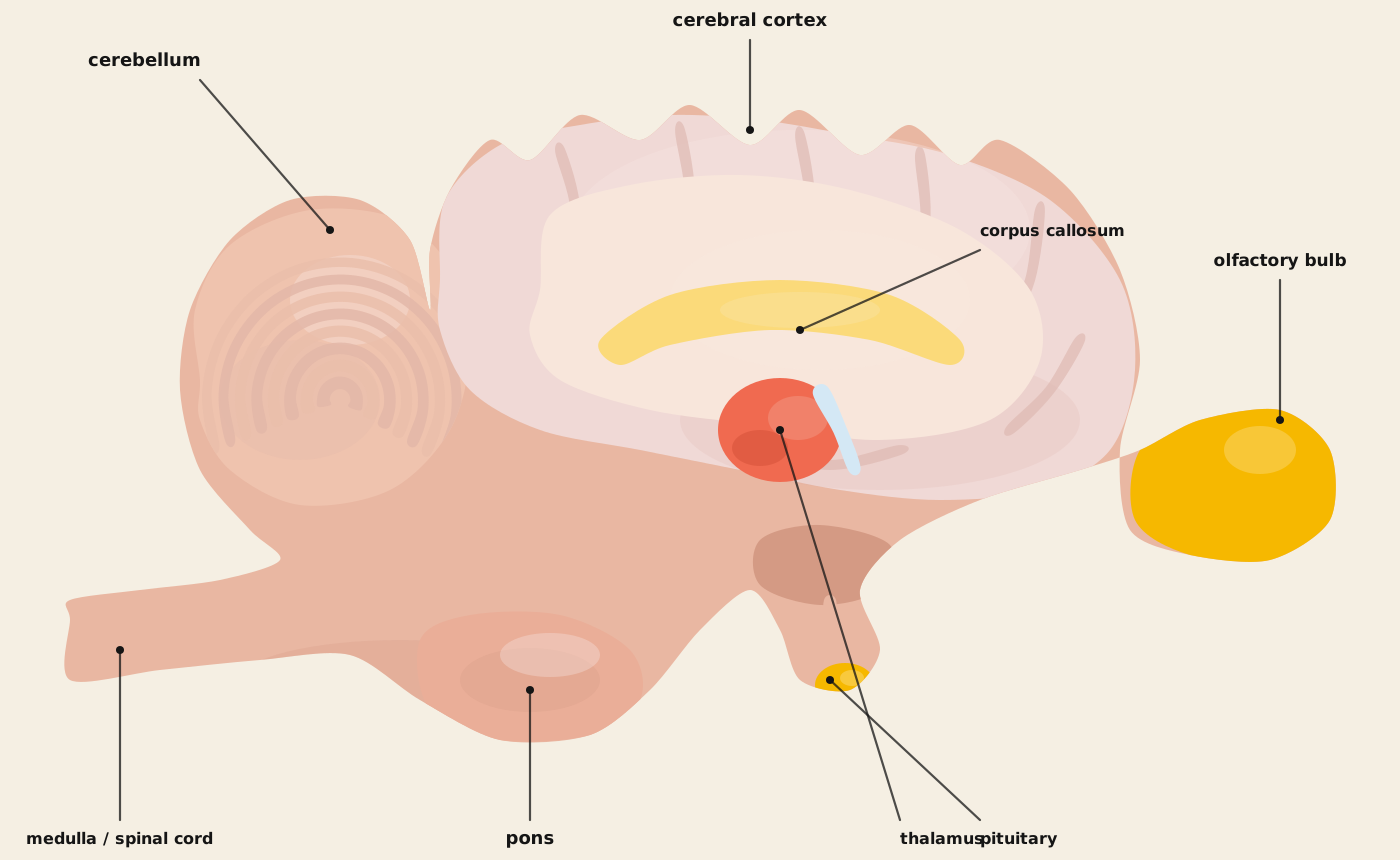
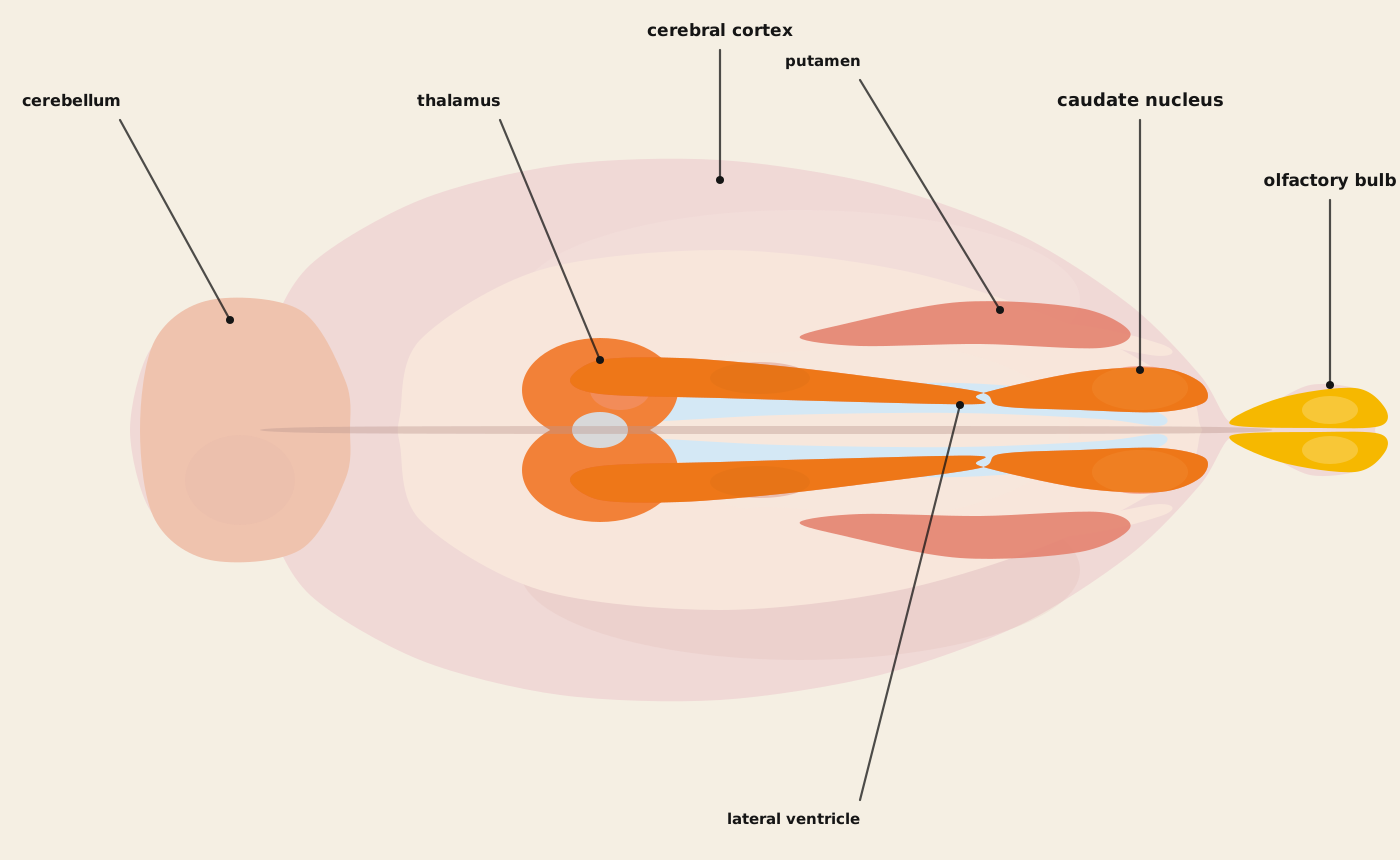
Jardim-Messeder, Herculano-Houzel, and colleagues (2017) counted roughly 530 million cortical neurons in the dogs they studied and about 250 million in a cat, against on the order of 16 billion in a human. The samples were small. Popular articles sometimes quote other round numbers. This is not a reliable way to declare a winner in your household, and it is a very poor way to assign a dog the “mental age of a two-year-old.” That comparison does not earn a place here.
What this means at home
- Keep cues short and consistent if you want a word to stick.
- Point, and look where you are pointing. Many dogs already treat that as information.
- When your dog looks back at you mid-problem, it may be a question. Show the next step before you decide the dog “isn’t smart.”
- Do not rank breeds, or dogs against cats, with a single number. Judge the animal in front of you by the jobs it is actually being asked to do.
Sources
- Kaminski, J., Call, J., & Fischer, J. (2004). Word learning in a domestic dog: evidence for fast mapping. Science, 304(5678), 1682–1683. https://doi.org/10.1126/science.1097859
- Pilley, J. W., & Reid, A. K. (2011). Border collie comprehends object names as verbal referents. Behavioural Processes, 86(2), 184–195. https://doi.org/10.1016/j.beproc.2010.11.007
- Andics, A., et al. (2016). Neural mechanisms for lexical processing in dogs. Science, 353(6303), 1030–1032. https://doi.org/10.1126/science.aaf3777
- Hare, B., Brown, M., Williamson, C., & Tomasello, M. (2002). The domestication of social cognition in dogs. Science, 298(5598), 1634–1636. https://doi.org/10.1126/science.1072702
- Müller, C. A., Schmitt, K., Barber, A. L. A., & Huber, L. (2015). Dogs can discriminate emotional expressions of human faces. Current Biology, 25(5), 601–605. https://doi.org/10.1016/j.cub.2014.12.055
- Miklósi, Á., et al. (2003). A simple reason for a big difference: wolves do not look back at humans, but dogs do. Current Biology, 13(9), 763–766. https://doi.org/10.1016/s0960-9822(03)00263-x
- Nagasawa, M., et al. (2015). Oxytocin-gaze positive loop and the coevolution of human-dog bonds. Science, 348(6232), 333–336. https://doi.org/10.1126/science.1261022
- Jardim-Messeder, D., et al. (2017). Dogs have the most neurons, though not the largest brain: trade-off between body mass and number of neurons in the cerebral cortex of large carnivoran species. Frontiers in Neuroanatomy, 11, 118. https://doi.org/10.3389/fnana.2017.00118
CritterWhy explains published research for curious readers. It is not veterinary advice and does not replace a conversation with a qualified veterinarian. If your animal seems unwell, or a habit changes suddenly, ask your vet.